What Causes Broken Gums & How To Treat Them Naturally
What Causes Broken Gums & How To Treat Them Naturally
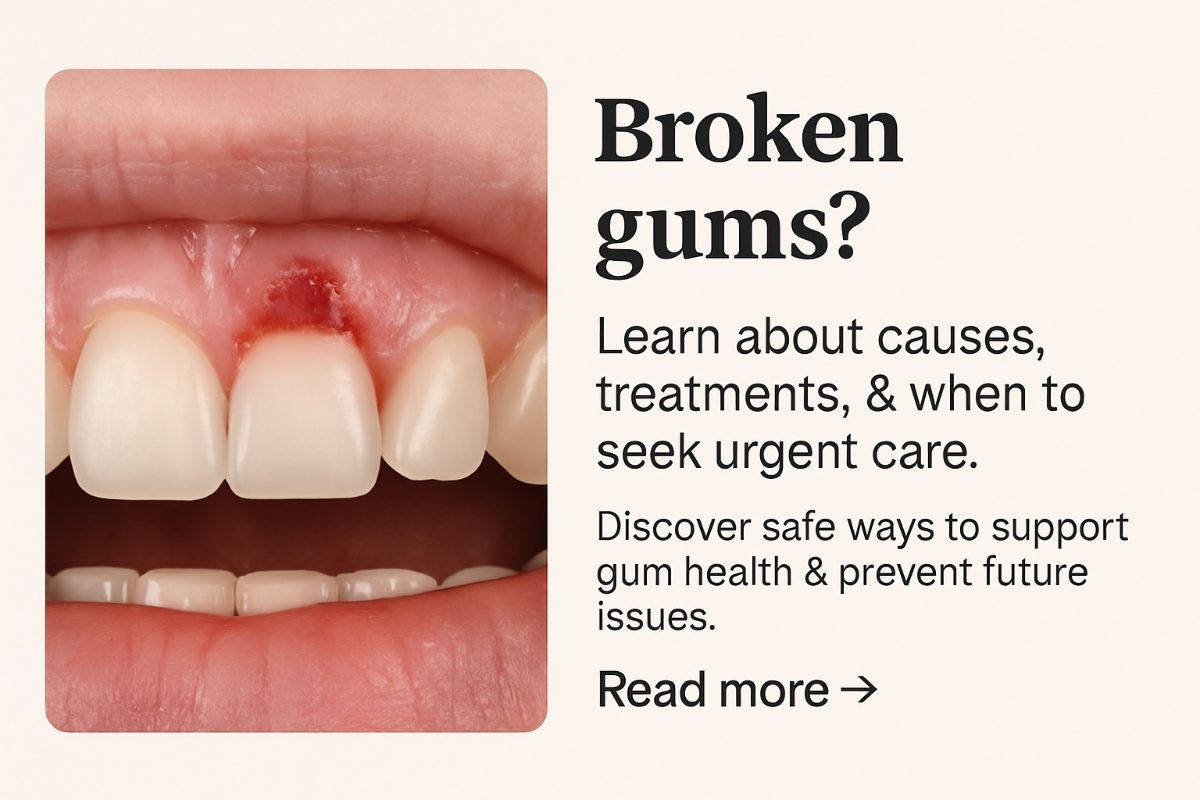
When people say “broken gums” they usually mean cuts, tears, receding gum lines, or ulcerated soft tissue around the teeth. These issues range from mild irritation to open wounds that hurt when you eat, speak, or brush. Good gum health matters not only for comfort and chewing, but also because unhealthy gums can let bacteria enter your bloodstream and affect overall health.
Common Causes Of Broken Gums And How They Hurt Gum Health
Mechanical Trauma
Hard brushing, aggressive flossing, using a stiff brush, poorly fitted dental appliances, or accidental injury can tear or wear away gum tissue. Repeated rubbing or poking makes gums thinner and more likely to break, which undermines long-term gum health.
Oral Infections And Inflammation
Gingivitis, periodontitis, cold sores, and fungal infections can erode tissue or cause painful ulcers. Ongoing inflammation weakens the gums’ ability to repair and increases the risk of deeper infection and tooth loss.
Chemical And Allergic Irritation
Harsh oral care products, bleaching agents, or sensitivity to dental materials can inflame and break down gum tissue. Irritants can be subtle but cause persistent soreness that harms gum health over time.
Systemic Factors
Poor nutrition (for example, vitamin C deficiency), smoking, certain medications, and autoimmune conditions can reduce gum resilience and slow healing. Managing these factors is key to restoring healthy gum tissue.
Poorly Fitting Dental Work & Bite Problems
Crowns, dentures, or misaligned teeth that rub or trap plaque can damage tissue and lead to recurring breaks. Fixing the source of irritation is often needed to protect gum health.
Signs That Your Broken Gums Need Urgent Care
See a dentist or seek immediate care if you have:
- Bleeding that won't stop
- Severe or worsening pain
- Pus, swelling, or spreading redness
- Fever or feeling unwell
- Difficulty eating, swallowing, or breathing
These signs can mean a deeper infection or tissue damage that threatens your gum health and overall safety. Don’t delay if symptoms are severe or rapidly worsening.
Safe, Natural Ways To Treat Broken Gums And Support Gum Health
Immediate Home Care
For minor cuts and soreness, try gentle warm saline rinses (1/2 tsp salt in 8 oz warm water) several times a day, eat soft foods, and use a soft-bristled toothbrush. Avoid tobacco, alcohol, and strong mouthwashes until tissue heals.
Natural Soothing And Antimicrobial Supports
Discuss these short-term, evidence-aligned options with your dentist before use:
- Topical aloe vera gel applied gently to soothe tissue
- Diluted clove oil for brief pain relief (use sparingly and never undiluted)
- Turmeric rinses made with warm water for mild anti-inflammatory support
- Increased dietary vitamin C to support collagen repair
Oral Probiotics & Diet
Probiotic lozenges and a nutrient-rich diet can help rebalance the oral microbiome and support healing. Focus on whole foods, lean protein, fruits and vegetables, and limit refined sugar that feeds harmful bacteria.
When To Avoid DIY Fixes
Avoid prolonged use of high-concentration hydrogen peroxide, strong acids, or untested herbal poultices. These can delay healing or cause chemical burns. Don’t delay professional care if symptoms worsen or fail to improve in a few days.
When Professional Treatment Is Needed — Biologic Options That Promote Healing
A dentist will begin with a clinical exam and may use digital X-rays or CBCT and oral microbiome testing to find the root cause. Treatments chosen depend on severity and cause.
Minimally invasive and biologic options that support soft-tissue repair and reduce recurrence include:
- Platelet-Rich Fibrin (PRF) to accelerate soft-tissue healing
- Laser-assisted therapy (LANAP) for infected gum pockets and regeneration
- Ozone therapy to reduce microbes and inflammation
- Biocompatible restorations to remove irritants and improve fit
Some cases may require antibiotics, suture repair of torn tissue, or referral to a periodontist for grafting. Those decisions are based on clinical findings and overall health.
Preventing Future Gum Breakage — Daily Habits To Maintain Gum Health
Follow a simple daily routine to reduce recurrence:
- Use a soft toothbrush and gentle circular brushing technique
- Clean between teeth daily with floss or interdental brushes
- Attend routine dental checkups and cleanings
- Quit tobacco and limit alcohol
- Manage blood sugar and eat a nutrient-rich diet
- Wear a night guard if you grind your teeth
About Tetrahealth & Finding Help For Broken Gums
Tetrahealth uses a biologic approach that links oral care to whole-body wellness. Drs. Alex and Michele Volchonok use advanced diagnostics and minimally invasive therapies—like PRF, LANAP, CBCT imaging, and oral microbiome testing—to treat root causes of gum problems and restore gum health. Tetrahealth has locations in Manhattan, NY and Greenwich, CT.
If your gums are broken and you need an evaluation,
schedule an appointment when you have persistent bleeding, spreading redness, severe pain, pus, or fever. Bring a list of symptoms, current medications, recent dental treatments, and photos of the area if possible. For urgent bleeding that won’t stop or trouble breathing or swallowing, seek immediate care or call emergency services.