Can a Tooth Be Saved Without a Root Canal?
Can a Tooth Be Saved Without a Root Canal?
If you have been told you may need a root canal, it is natural to wonder whether there is another option. Many patients want to preserve their natural teeth but are also concerned about invasive treatment, infection, long-term health, or the possibility of needing more dental work later.
The answer is: sometimes, a tooth can be saved without a root canal — but it depends on the condition of the nerve, the amount of damage, and whether infection is present.
In some cases, early treatment, biomimetic dentistry, conservative restorations, ozone therapy, or other tooth-preserving approaches may help protect a damaged tooth before the nerve becomes irreversibly infected. In other cases, a root canal or extraction may be necessary to protect your oral and overall health.At Tetra Health, our goal is to evaluate the full picture and recommend the most biologically appropriate treatment for your situation.
Why Would a Tooth Need a Root Canal?
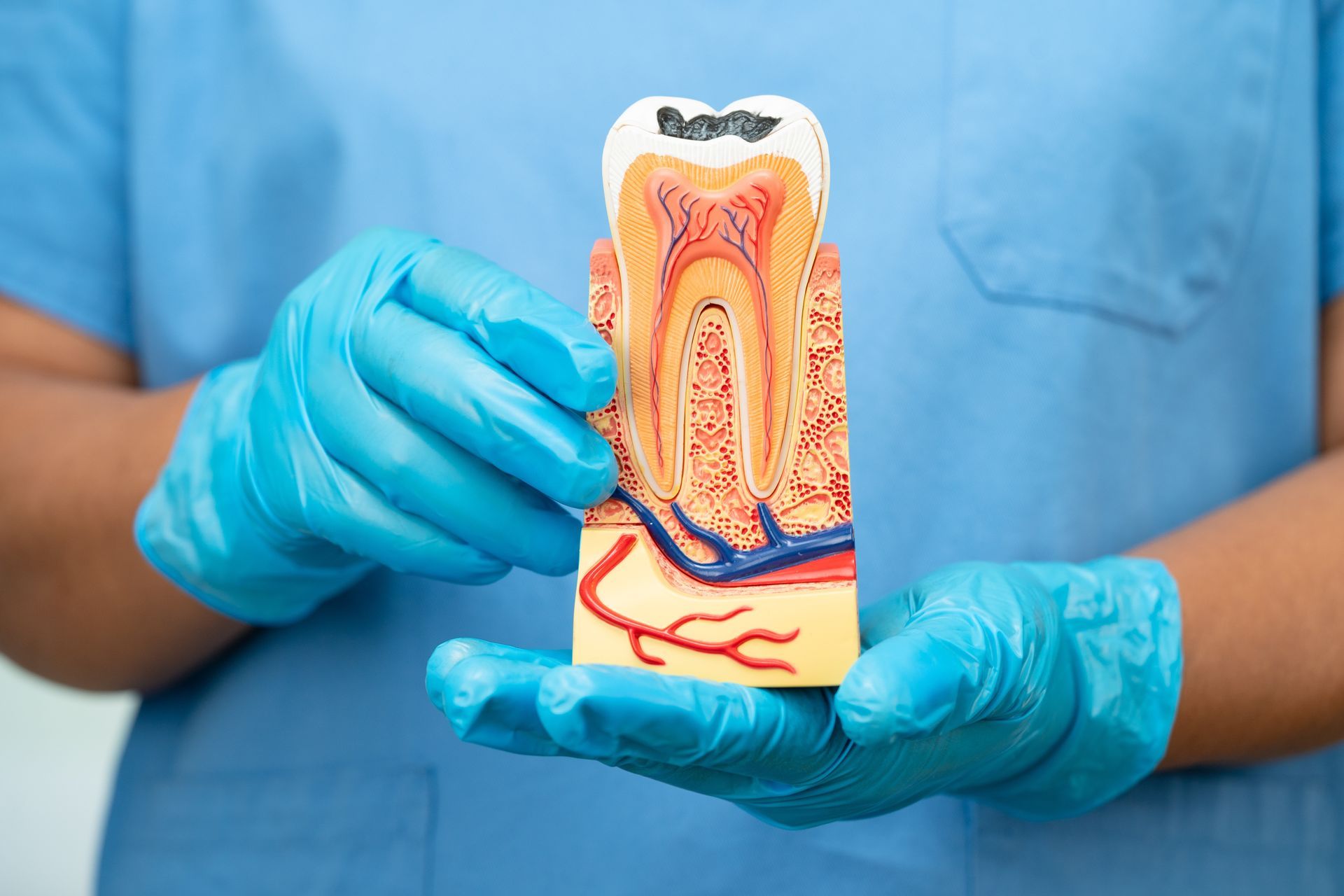
Some dentists recommend a root canal when the pulp, or nerve tissue inside the tooth, becomes infected or irreversibly inflamed. This can happen when bacteria reach the inner part of the tooth through deep decay, cracks, trauma, repeated dental work, or a leaking restoration.
The pulp contains nerves, blood vessels, and connective tissue. When it becomes severely damaged, the tooth may no longer be able to heal on its own.
Common reasons a root canal may be recommended include:
- Deep decay close to the nerve
- A dental abscess
- Severe tooth pain
- Lingering sensitivity to hot or cold
- A cracked or fractured tooth
- Trauma to the tooth
- Infection at the root tip
- Swelling or tenderness in the gums
- A darkened or discolored tooth
- A large failing filling or crown
When Can a Tooth Be Saved Without a Root Canal?
This is more likely when the problem is caught early.
A root canal may be avoidable in cases involving:
- Moderate decay that has not reached the nerve
- A cracked tooth without nerve infection
- A leaking filling caught early
- Tooth sensitivity caused by enamel or dentin exposure
- A weakened tooth that can be restored conservatively
- Inflammation that may still be reversible
- A cavity close to the nerve but not yet infected
- Bite-related pain rather than nerve infection
The key question is whether the pulp is reversibly inflamed or irreversibly damaged.
If the nerve is irritated but still capable of healing, conservative treatment may be possible. If the nerve is infected, dead, or abscessed, avoiding treatment can allow the infection to worsen.
The Difference Between Reversible and Irreversible Pulpitis
Dentists often evaluate the health of the tooth nerve using terms like reversible pulpitis and irreversible pulpitis.
Reversible pulpitis means the nerve is irritated but may still recover once the cause is treated. For example, a cavity, leaking filling, or bite issue may be causing sensitivity, but the nerve has not been permanently damaged.
Signs may include:
- Brief sensitivity to cold
- Mild discomfort that goes away quickly
- Pain only when stimulated
- No swelling
- No abscess
- No lingering spontaneous pain
Irreversible pulpitis means the nerve is too inflamed or infected to heal on its own. In these cases, a definitive treatment is necessary.
Signs may include:
- Spontaneous tooth pain
- Pain that wakes you up at night
- Lingering hot or cold sensitivity
- Throbbing pain
- Swelling or gum pimple
- Pain when biting
- An abscess on imaging
- A tooth that has become non-vital
Because symptoms can overlap, testing and imaging are important. A tooth that feels painful is not always doomed, and a tooth that feels fine may still have infection.
Tooth-Preserving Options That May Help Avoid a Root Canal
If the tooth is not infected and the nerve is still healthy enough, several conservative treatments may help preserve the tooth without a root canal.
Biomimetic Dentistry
Biomimetic dentistry focuses on preserving natural tooth structure and restoring the tooth in a way that mimics its natural strength and function.
Rather than removing large amounts of tooth structure for a full crown, a biomimetic approach may use advanced bonding techniques, composite restorations, inlays, onlays, or partial-coverage ceramic restorations to reinforce the tooth.
This may be helpful for:
- Cracked teeth
- Large cavities
- Old failing fillings
- Weakened teeth
- Teeth at risk of needing crowns
- Teeth with early nerve irritation
Biomimetic dentistry cannot save every tooth from a root canal. But when performed early enough, it may help seal the tooth, reduce bacterial leakage, stabilize cracks, and protect the nerve from further damage.
Conservative Decay Removal and Deep Cavity Management
When decay is close to the nerve, a dentist may use a conservative approach to remove infected tooth structure while avoiding unnecessary trauma to the pulp.
In some cases, this may involve placing a protective liner or base over the deeper area before restoring the tooth. The goal is to protect the nerve and allow the tooth to calm down.
This type of treatment is only appropriate when the pulp is still vital and not infected.
Inlays and Onlays
Inlays and onlays are custom restorations used when a tooth needs more support than a filling but may not require a full crown.
An inlay fits within the biting surface of the tooth, while an onlay covers one or more cusps. These restorations can preserve more healthy tooth structure than a traditional crown while still strengthening damaged areas.
For patients trying to avoid more invasive treatment, an inlay or onlay may be an excellent option if the tooth is structurally sound enough.
Replacing a Failing Filling Before It Gets Worse
Large or leaking fillings can allow bacteria to enter the tooth over time. If caught early, the filling may be replaced before bacteria reach the nerve.
Warning signs of a failing filling may include:
- Sensitivity
- Food getting stuck
- Cracks around the filling
- Rough edges
- Discoloration
- Pain when chewing
- A visible gap between filling and tooth
Replacing a failing restoration early may help prevent the need for a root canal later.
Bite Adjustment or Nightguard Therapy
Sometimes tooth pain is not caused by infection at all. It may be caused by excessive bite pressure, grinding, clenching, or trauma from an uneven bite.
In these cases, treatment may include:
- Bite adjustment
- Nightguard therapy
- TMJ evaluation
- Restoring worn or cracked teeth
- Reducing excessive force on a sensitive tooth
If the nerve is not infected, relieving the source of pressure may help the tooth recover.
Ozone Therapy as Supportive Care
Some biological dentists use ozone therapy as part of a minimally invasive approach to managing bacteria and supporting healing.
Ozone may be used in certain restorative, periodontal, or surgical protocols because of its antimicrobial properties. However, it should not be viewed as a guaranteed substitute for a root canal when the tooth nerve is infected or dead.
In the right case, ozone may be part of a broader tooth-preserving plan. The dentist must still determine whether the tooth is restorable and whether the nerve can heal.
When a Root Canal May Still Be Necessary
While root canals are not recommended as a biological dentistry treatment modality, there are a few situations where it may be the most appropriate way to keep the tooth. It is important to speak with your dentist before proceeding with any treatment to ensure it is personalized and right for you
A root canal may be necessary when:
- Patients have a history of osteonecrosis where extraction poses a greater risk. The tooth has an abscess
- The patient is a child, and the root canal-treated tooth will be used to help with jawbone and tooth development
- The patient has uncontrolled bleeding disorders or uncontrolled blood sugar levels that need to be controlled prior to biologic dental extraction therapy.
When Extraction May Be the Better Option
In some cases, the tooth cannot be predictably saved with either biomimetic dentistry or root canal therapy. Extraction may be recommended if the tooth is too damaged, fractured, infected, or structurally compromised.
Extraction may be considered when:
- The tooth has a vertical root fracture
- There is severe bone loss
- The tooth is not restorable
- Infection is persistent
- The root structure is compromised
- The crown portion of the tooth is too damaged
- The patient prefers removal after reviewing risks and benefits
- Patient is experiencing systemic health issues (cardiovascular, liver, kidney, gut, or cerebrovascular diseases)
- Patients with autoimmune conditions
For patients seeking a biological approach, extraction may be performed with special attention to cleaning the site, supporting healing, and planning a biocompatible replacement option when appropriate.
Replacement options may include zirconia dental implants, ceramic bridges, removable appliances, or other restorative solutions depending on the case.
Root Canal vs. Tooth Preservation: How to Decide
Choosing the right treatment requires a careful diagnosis. The decision should not be based only on fear of root canals or a desire to avoid extraction. It should be based on the condition of the tooth and the patient’s overall health goals.
Your dentist may evaluate:
- Is the nerve alive?
- Is the nerve infected?
- Is there an abscess?
- How deep is the decay?
- Is the tooth cracked?
- Is the crack restorable?
- How much healthy tooth structure remains?
- Is the bite contributing to the problem?
- Is there bone loss?
- What are the long-term risks of each option?
- What replacement options exist if the tooth is removed?
- What approach best supports oral-systemic health?
At Tetra Health, we take a conservative and biological approach whenever possible. If a tooth can be predictably preserved, that is often the preferred path. If the tooth is infected or non-restorable, we help patients understand their options clearly.
Signs You Should Not Wait to Be Evaluated
If you are trying to avoid a root canal, early evaluation is essential. Waiting too long can turn a treatable problem into an infection.
Schedule an evaluation if you notice:
- Tooth pain that does not go away
- Lingering sensitivity to hot or cold
- Pain when biting
- Swelling in the gums or face
- A pimple on the gums
- Bad taste or drainage
- A cracked tooth
- A loose filling or crown
- Darkening of the tooth
- Pain that wakes you up at night
The earlier the tooth is assessed, the more options you may have.
Can Natural Remedies Save a Tooth from a Root Canal?
Natural remedies may help temporarily reduce discomfort or inflammation, but they cannot remove deep decay, repair cracks, or eliminate an infection inside the tooth.
Saltwater rinses, clove oil, herbal remedies, supplements, ozone injections, or anti-inflammatory strategies may provide short-term symptom relief, but they should not replace dental diagnosis and treatment.
If the pulp is infected or an abscess is present, professional care is necessary. Delaying treatment can make the infection worse and may reduce the chance of saving the tooth.
How Tetra Health Approaches Root Canal Alternatives
At Tetra Health, we understand that many patients want to avoid unnecessary dental treatment while still protecting their health. Our approach is centered on tooth preservation, biological dentistry, and oral-systemic wellness.
When evaluating whether a tooth can be saved without a root canal, we look at the full picture:
- Tooth structure
- Nerve vitality
- Infection status
- Bite forces
- Gum and bone health
- Material compatibility
- Patient symptoms
- Medical history
- Long-term prognosis
- Whole-body health considerations
If conservative treatment is possible, we may recommend a tooth-preserving restoration, biomimetic approach, or other minimally invasive care. If the tooth is infected or cannot be predictably saved, we will explain why and review treatment options that focus on long-term oral and systemic health.
The goal is not simply to avoid a root canal. The goal is to choose the healthiest, most predictable option for your tooth and your overall wellness.
Schedule a Tooth Preservation Consultation in NYC
A tooth can sometimes be saved without a root canal, especially when the problem is caught early and the nerve is still healthy enough to recover. But once infection or irreversible nerve damage is present, more involved treatment may be necessary.
If you have been told you need a root canal or want a second opinion, a biological dental evaluation can help you understand your options.
FAQs About Saving a Tooth Without a Root Canal
Can I avoid a root canal if my tooth hurts?
Sometimes, but it depends on the cause of the pain. If the nerve is only irritated, conservative treatment may help. If the nerve is infected or dying, a root canal or extraction may be needed.
Can a deep cavity heal without a root canal?
A deep cavity cannot heal on its own, but if it has not infected the nerve, it may be possible to restore the tooth without a root canal.
Can biomimetic dentistry prevent a root canal?
Biomimetic dentistry may help preserve and strengthen certain damaged teeth before the nerve becomes infected. It cannot replace a root canal when the pulp is already infected or dead.
What happens if I delay treatment of an infected root canal?
If the tooth is infected, delaying treatment may allow the infection to spread further, causing painful abscesses, worsen bone loss, and even compromise adjacent teeth..
Is extraction better than a root canal?
Saving the natural vital tooth is always the preferred goal, but if the tooth is severely infected, pivoting to preserve the gum and bone may be a better long term solution to prepare the site for a zirconia dental implant.
Are there holistic alternatives to root canals?
Holistic alternatives may include tooth-preserving restorative care when the nerve is still healthy, or biological extraction and replacement if the tooth with a zirconia implant if it cannot be saved. The right option depends on diagnosis.
Can ozone therapy replace a root canal?
Ozone therapy may be used as supportive care in biological dentistry, but it does not stop root canal infections.
How do I know if my tooth can be saved?
You need a dental evaluation, imaging, vitality testing, and structural assessment. These help determine whether the tooth can be restored conservatively or needs root canal treatment or extraction.